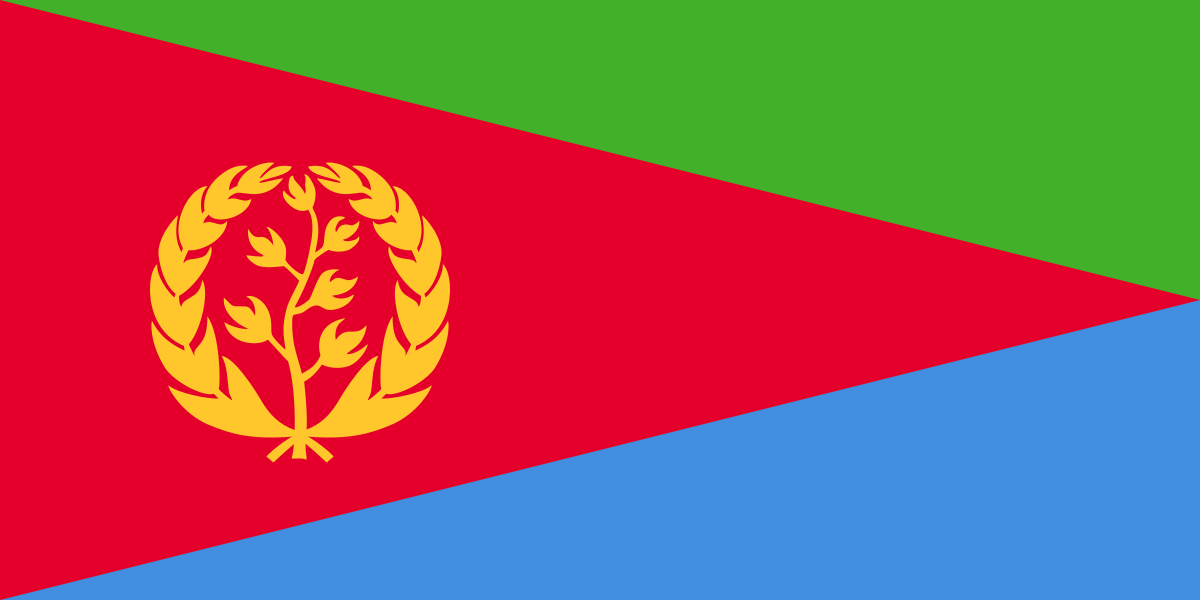
Eritrea
State of Eritrea
Liberty
Analysis
A weighted composite metric synthesizing global data on democracy, human rights, economic freedom, and societal development.
Supporting
Indices
Democracy Quality
Comprehensive analysis of democratic institutional quality
Economic Policy
Analysis of rule of law, government size, and regulatory efficiency
Liberal Democracy
Accountability to citizens through elections and individual rights protection
Life Motives
Assessment
Investment & Business
High risk environment. Consider significant safeguards before deploying capital.
Living & Comfort
Extremely high risk for daily living; high crime rates and compromised local security structures.
Career & Labor
Challenging employment conditions with heavy restrictions and significant labor market headwinds.
Digital Nomad
Avoid for remote work; severe structural internet censorship and highly restricted visitation rights.
Education & Study
Severe restrictions on communication and academic exchange limit the viability of open study.
Safety & Inclusion
Severe systemic risks for minorities and women; legal frameworks lack inclusive protections.
Advocacy & Expression
Highly dangerous environment for advocacy; severe systemic censorship and strict communication controls in place.
Stability & Justice
Critical institutional failure risk; judicial independence and general rule of law are highly compromised.
Structural
Categories
Freedom of Speech
Severe restrictions on public expression and suppressed media.
Rule of Law
Weak rule of law with pervasive legal irregularities.
Women's Freedom
Severe restrictions on women's autonomy and legal standing.
Minorities Freedom
Insufficient data for assessment.
Crime & Safety
Insufficient data for assessment.
Individual Liberties
Severe constraints on personal autonomy and identity expression.
Democratic Health
Severe democratic deficits or authoritarian structures.
Institutional Integrity
Pervasive corruption and lack of government integrity.
Civil Justice
Compromised legal integrity with systemic political interference.
Economic Vigor
Stagnant or highly suppressed economic capacity.
Macroeconomic Stability
Severe currency instability and massive inflation risks.
Market Openness
Closed market with severe barriers to external trade.
Regulatory Environment
Insufficient data for assessment.
Quality of Life
Critical lack of basic human development infrastructure.
Social Tolerance
Systemic marginalization and lack of minority protections.
Expression and Information
Insufficient data for assessment.
Civil Society
Strict suppression of non-governmental associations.
Metadata &
Technical Details
Basic Information
Capital
Asmara
Region
Africa
Subregion
Eastern Africa
Landlocked
No
Culture & Language
Languages
Arabic, English, Tigrinya
Currencies
Eritrean nakfa (Nfk)
Technical Details
Country Codes
ER • ERI
Neighboring Countries
DJI, ETH, SDN